








Bloodox-2019 records how hemoglobin binds and releases oxygen as oxygen partial pressure changes. It produces association and dissociation curves and reports P50, the Hill coefficient, and ROQ for whole blood, erythrocyte lysates, hemoglobin solutions, and hemoglobin-based oxygen carriers.
What the run records
Oxygen partial pressure, measured in the sample
A Clark electrode follows PO2 continuously. Bloodox-2019 pairs that reading with dual-wavelength spectrophotometry, so oxygen partial pressure and hemoglobin oxygenation are stored together.
Binding and release, on one curve
As PO2 rises, saturation rises and the association curve is recorded. As PO2 falls, saturation falls and the dissociation curve is recorded. The same sample can be compared across conditions without rebuilding the setup.
Samples
- Whole blood and erythrocyte lysate
- Hemoglobin solution
- Hemoglobin-based oxygen carriers
- Other samples where hemoglobin oxygen binding or release is the question
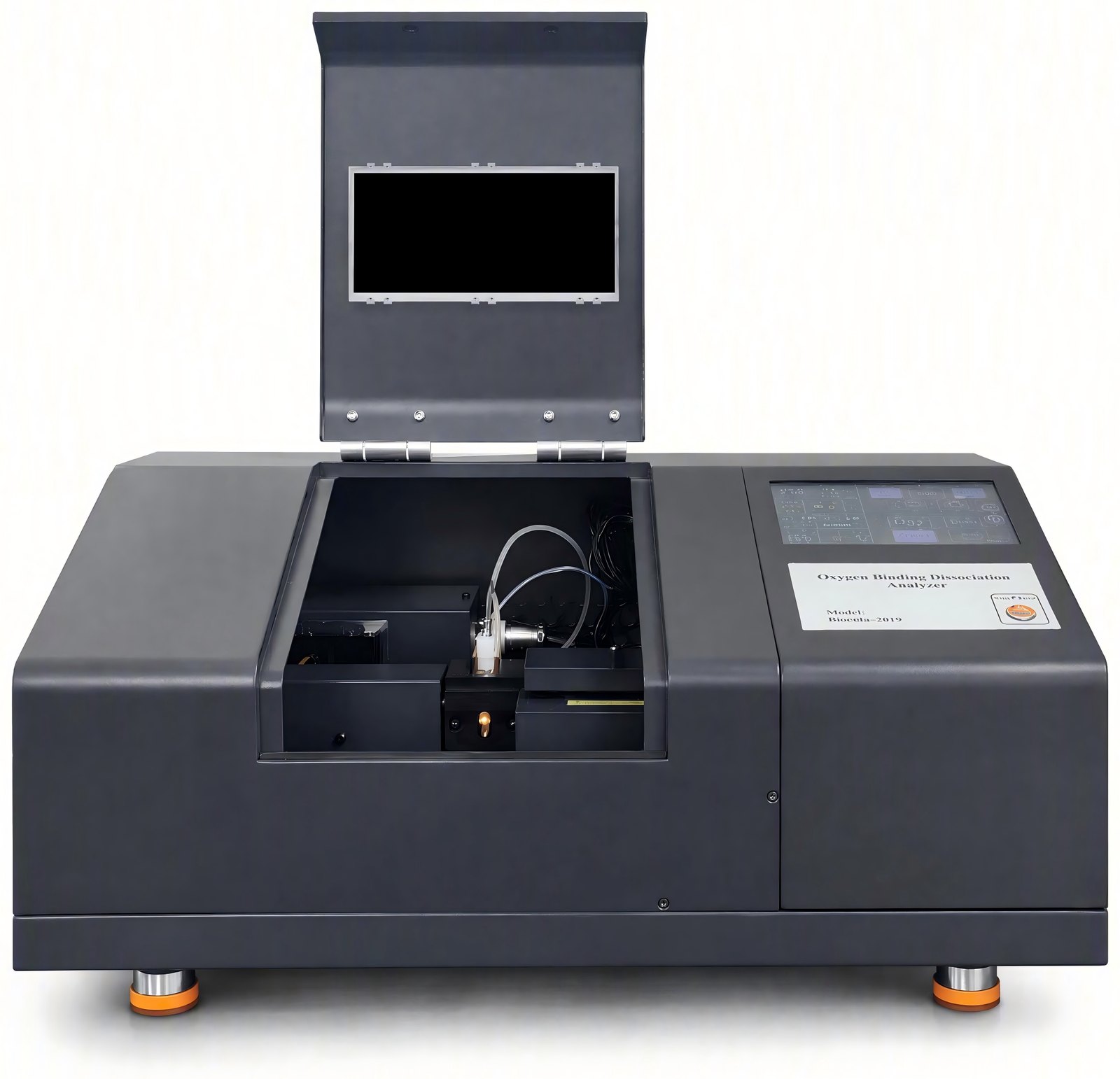
Experimental control
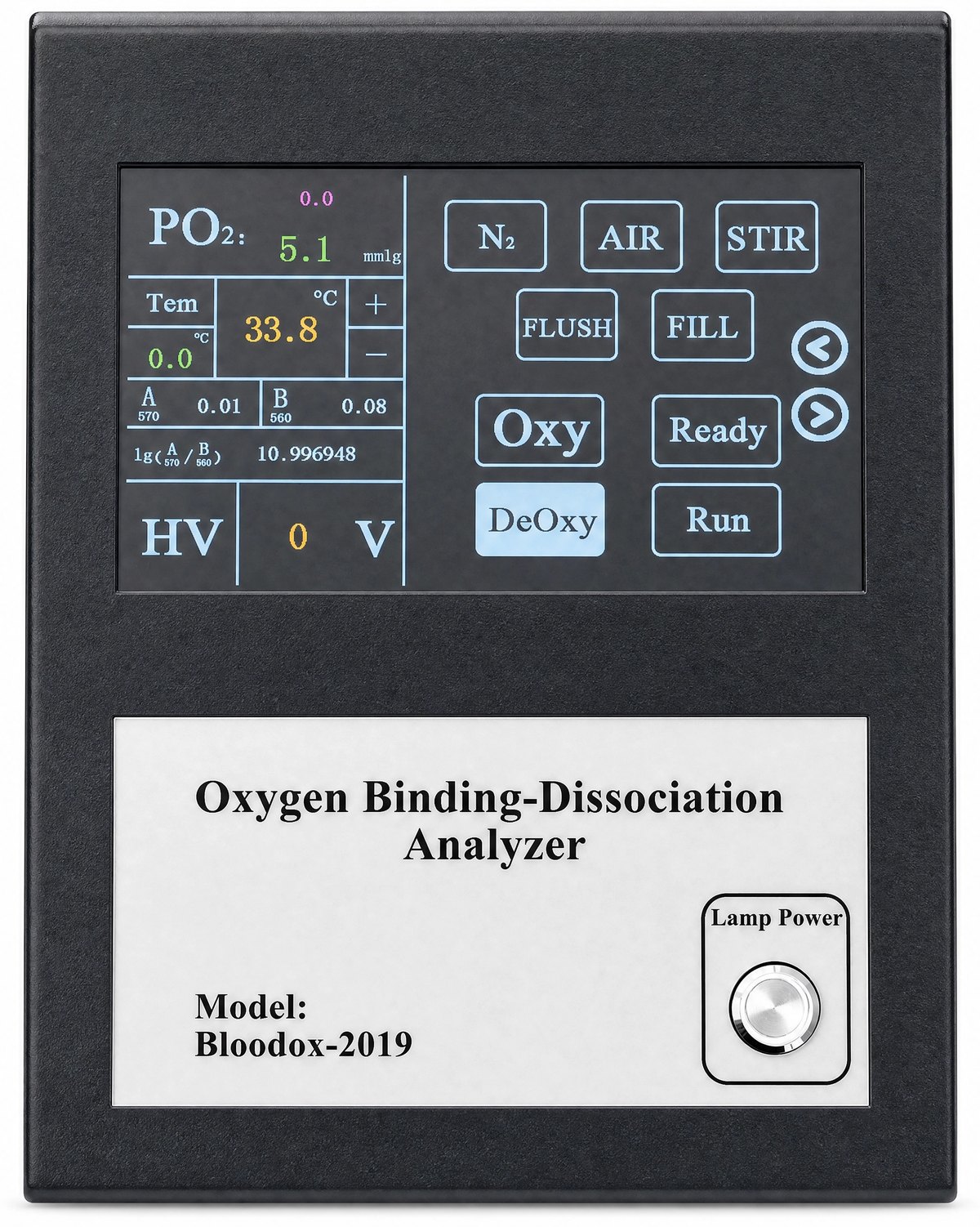
Gas path, temperature, PO2, sample handling, and acquisition sit in one instrument, so association and dissociation conditions stay under the same control.
Training videos are sent with the instrument.
Gas flow
Air and nitrogen are set from 0–20 mL/min. Flow rate sets how quickly the sample is oxygenated or deoxygenated.
Temperature
A microcomputer controller holds the sample chamber at 37 ± 0.1 °C, which keeps temperature from shifting the affinity result.
From the touchscreen
- Air or nitrogen selection and gas flow
- Oxygenation and deoxygenation
- Sample fill and flush
- Live PO2 and temperature
Measurement principle
Deoxyhemoglobin and oxyhemoglobin absorb light differently. Bloodox-2019 follows oxygenation by dual-wavelength spectrophotometry while the Clark electrode measures PO2. Under air or nitrogen the sample is oxygenated or deoxygenated, and both signals are acquired continuously. The result is the oxygen association or dissociation curve.
Sample chamber
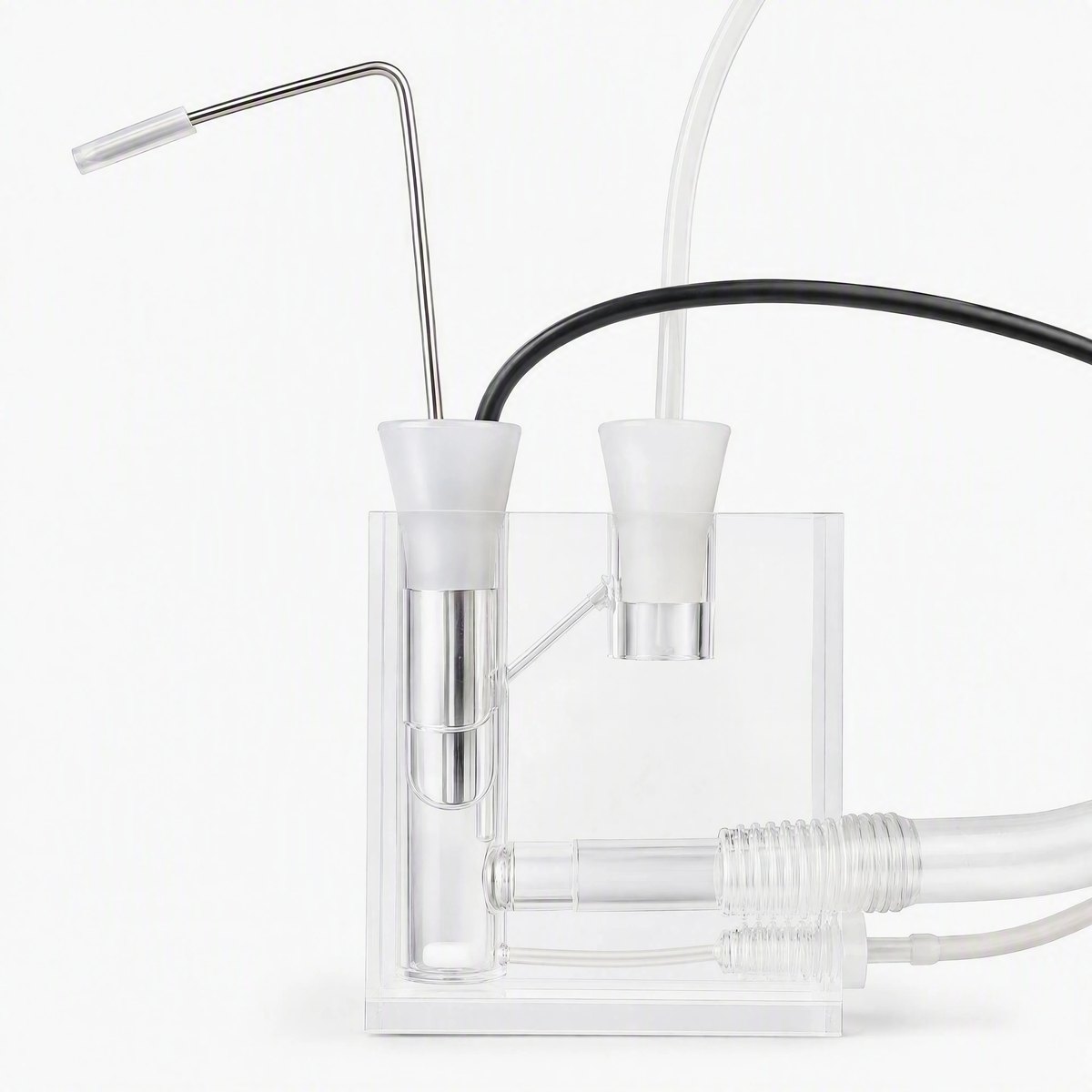
The chamber combines the Clark electrode, temperature sensing, and magnetic stirring. PO2 and temperature are monitored together, and stirring keeps the sample uniform. Gas, fill, and flush lines are connected to the chamber, so intake, air or nitrogen delivery, and discharge are started from the control panel.
- Automatic sample intake
- Air or nitrogen delivery
- Sample discharge
Data analysis
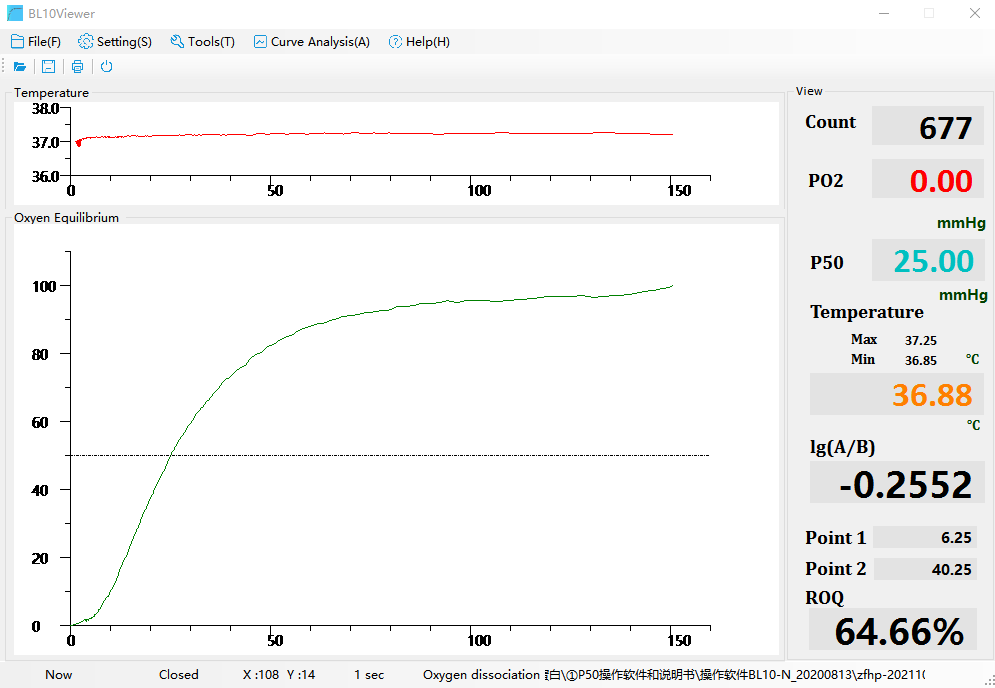
BL10 records the run. BL10 Viewer processes the curve, calculates the parameters, and compares results.
Association and dissociation curves
The curve is shown as it is acquired. Viewer tools cover the usual cleanup before a parameter is reported:
- Raw Curve
- Translation
- Smooth
- LineFit
- Zero-Completion
- Raw data export
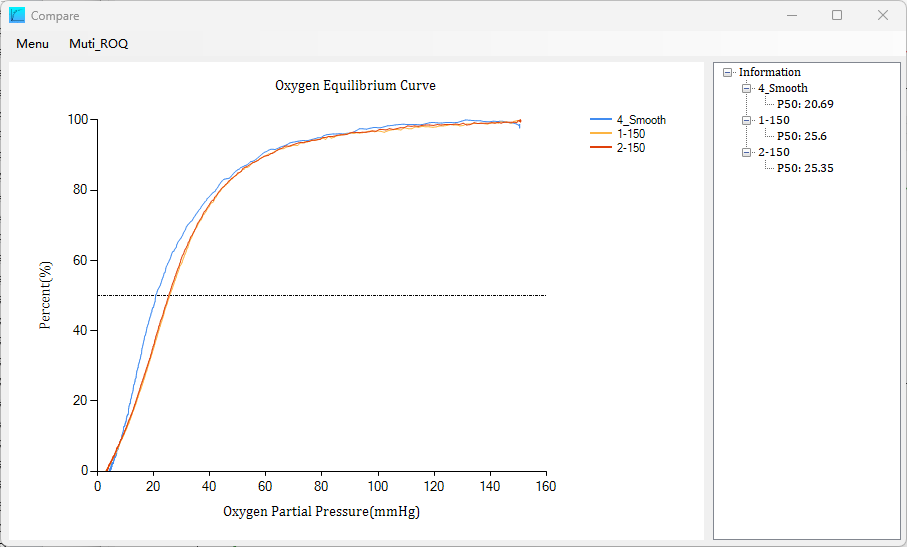
P50
P50 is the PO2 at 50% hemoglobin oxygen saturation. A higher P50 generally means lower oxygen affinity and a greater tendency to release oxygen. A lower P50 means higher affinity and a greater tendency to bind oxygen.
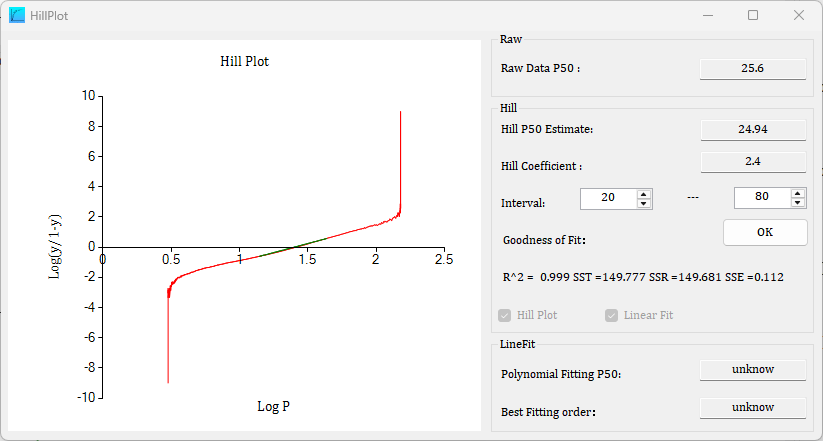
Hill coefficient
The Hill fit describes cooperativity of hemoglobin–oxygen binding, so samples or conditions can be compared on more than P50 alone.
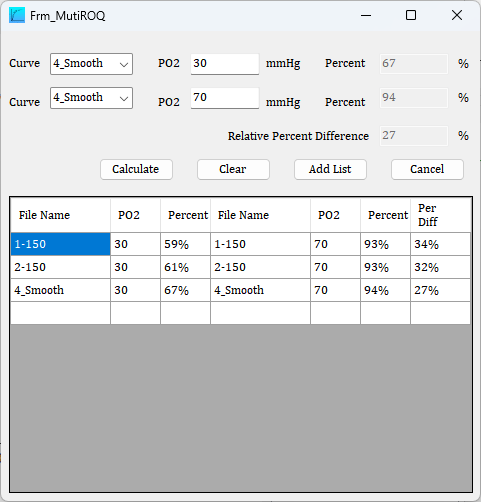
ROQ
ROQ is the saturation difference between any two PO2 values you set. It shows how oxygenation changes inside a chosen window, rather than only at 50% saturation.
Several results at once
Curves can be overlaid to compare a left or right shift, P50, affinity, binding, release, and the difference between experimental groups.
Where it is used
Erythrocyte oxygen function
- Whole-blood oxygen carrying and release
- Red-cell oxygen affinity
- Changes in red-cell function
Blood storage
- Red-cell function during storage
- Storage conditions and processing
- Effects on oxygen affinity
Hypoxia and altitude
- Affinity at altitude or under hypoxia
- Hypoxic adaptation
- Related red-cell function
Hemoglobin and oxygen carriers
- Hemoglobin function
- Hemoglobin-based oxygen carriers
- Formulation and process effects on binding and release
The same measurements are used in basic studies of polycythemia, high viscosity, hemolysis, thrombosis, and related questions about how hemoglobin carries oxygen.
Software and system
BL10
Acquisition software for the run: live parameters and the raw record.
BL10 Viewer
Analysis software for curve processing, P50, Hill coefficient, ROQ, and comparison across results.
What is in the instrument
- Dual-wavelength optical detection
- Clark oxygen electrode
- Sample chamber
- Gas-flow control
- Temperature control and temperature sensor
- Magnetic stirring
- Electronics and touchscreen control
- Acquisition and analysis software
Specifications
| PO2 measurement | Clark oxygen electrode |
|---|---|
| Hemoglobin oxygenation | Dual-wavelength spectrophotometry |
| Gases | Air / nitrogen |
| Gas flow range | 0–20 mL/min |
| Measurement temperature | 37 ± 0.1 °C |
| Sample requirement | About 3–6 mg hemoglobin. Whole blood is typically about 30–50 µL. |
| Communication | Serial-to-USB |
| Power | AC 110–240 V, 50/60 Hz |
| Main unit | 64 × 40 × 32 cm |
| Acquisition software | BL10 |
| Analysis software | BL10 Viewer |
Selected literature
Methods sections often cite BLOODOX-2018 or Bloodox-2018 (Softron). The current instrument is Bloodox-2019.
- Zhong, X., et al. Hb-O2 affinity parameters as prognostic factors for 28-day mortality in ARDS patients: A prospective study. Medicine in Novel Technology and Devices, 2026. 29: 100418.
- Wang, L., et al. Hemocompatibility Evaluation of PEGylated Bovine Hemoglobin. International Journal of Molecular Sciences, 2026. 27(3): 1262.
- Shu, P., et al. Spermine: A Hemoglobin Modifier That Reduces Autoxidation and Regulates Oxygen Delivery. International Journal of Molecular Sciences, 2026. 27(3): 1197.
- Chu, Z., et al. Simulated Oxygen Supply Efficiency Assessment to Represent Stored Red Blood Cells Quality. Life, 2026. 16(2): 205.
- Sheng, M., et al. Hemoglobin Oxygen Affinity Does Not Change in the Canine Model of Moderate Acute Normovolemic Hemodilution. ACS Omega, 2025. 10(36): 41620–41629.
- Sheng, M., et al. Lysine Lactylation of Hemoglobin Promotes Oxygen Release in Red Blood Cells. ACS Omega, 2025. 10(21): 21889–21907.
- Li, Q., et al. Staphylococcus aureus β-hemolysin impairs oxygen transport without causing hemolysis. Virulence, 2025. 16(1): 2490208.
- Cui, T., et al. 3′ UTR-truncated HMGA2 promotes erythroblasts production from human embryonic stem cells. Stem Cells Translational Medicine, 2025. 14(1): szaf001.
- Zhang, L., et al. Preliminary Study on Polymerization between Hemoglobin and Enzymes during the Preparation of PolyHb-SOD-CAT-CA. Doklady Biochemistry and Biophysics, 2024. 518(1): 463–474.
- Yu, H., et al. An ex vivo method to evaluate vasoactivity induced by hemoglobin-based oxygen carriers in resistance vessels. Frontiers in Bioengineering and Biotechnology, 2024. 12: 1376806.
- Shu, P., et al. Cefmetazole sodium as an allosteric effector that regulates the oxygen supply efficiency of adult hemoglobin. Journal of Biomolecular Structure and Dynamics, 2024. 42(14): 7442–7456.
- Meng Weicheng, et al. The Impact of Reduced Bisphosphoglycerate Mutase (BPGM) Enzyme Activity in Sensitized Red Blood Cells on Oxygen Carrying/Releasing Capacity. Journal of Clinical Transfusion and Laboratory Medicine, 2024. 26(3): 308–314.
- Zhao, B., et al. Effect of roxadustat on red blood cell lifespan in patients with long-term haemodialysis: a single-centre, prospective, single-arm study. Clinical Kidney Journal, 2023. 16(9): 1500–1507.
- Zhang, F., et al. An extra-erythrocyte role of haemoglobin body in chondrocyte hypoxia adaption. Nature, 2023. 622(7984): 834–841.
- Xu, L., et al. Generation of Rh D-negative blood using CRISPR/Cas9. Cell Proliferation, 2023. 56(11): e13486.
- Liu, R., et al. The Preliminary Study on Preparation Technology of PolyHb-SOD-CATCA — The Effects of Different Extractants. Current Pharmaceutical Biotechnology, 2023. 24(15): 1928–1937.
- Li, B., et al. PEG-conjugated bovine haemoglobin enhances efficiency of chemotherapeutic agent doxorubicin with alleviating DOX-induced splenocardiac toxicity in the breast cancer. Artificial Cells, Nanomedicine, and Biotechnology, 2023. 51(1): 120–130.
- Chu, Z., et al. Resveratrol, a New Allosteric Effector of Hemoglobin, Enhances Oxygen Supply Efficiency and Improves Adaption to Acute Severe Hypoxia. Molecules, 2023. 28(5).
- Zhang, H., et al. Phenoxyaromatic Acid Analogues as Novel Radiotherapy Sensitizers: Design, Synthesis and Biological Evaluation. Molecules, 2022. 27(8).
- Zhang, G., et al. Preliminary Intermittent Hypoxia Training Alleviates the Damage of Sustained Normobaric Hypoxia on Human Hematological Indexes and Cerebral White Matter. High Altitude Medicine & Biology, 2022. 23(3): 273–283.
- Wang, L., et al. Remote ischemic conditioning enhances oxygen supply to ischemic brain tissue in a mouse model of stroke: Role of elevated 2,3-biphosphoglycerate in erythrocytes. Journal of Cerebral Blood Flow & Metabolism, 2021. 41(6): 1277–1290.
- Kanagarajan, S., et al. Production of functional human fetal hemoglobin in Nicotiana benthamiana for development of hemoglobin-based oxygen carriers. International Journal of Biological Macromolecules, 2021. 184: 955–966.
- Chu, Z., et al. The P(50) value detected by the oxygenation-dissociation analyser and blood gas analyser. Artificial Cells, Nanomedicine, and Biotechnology, 2020. 48(1): 867–874.
Contact us